My Hands Look Like Keith Richards'. I'm Still Playing.
I looked down one day and thought: Those look like Keith Richards' hands.
Not a compliment I was expecting to give myself. But there it was, my middle finger, first joint swollen and enlarged, the fingers on my left hand starting to bend toward the center of my body. The kind of hands you see in photos of old blues players and aging rock legends. The kind of hands that tell a story before you even pick up the guitar.
The story they were telling me: arthritis, or Arthur, as I call him.
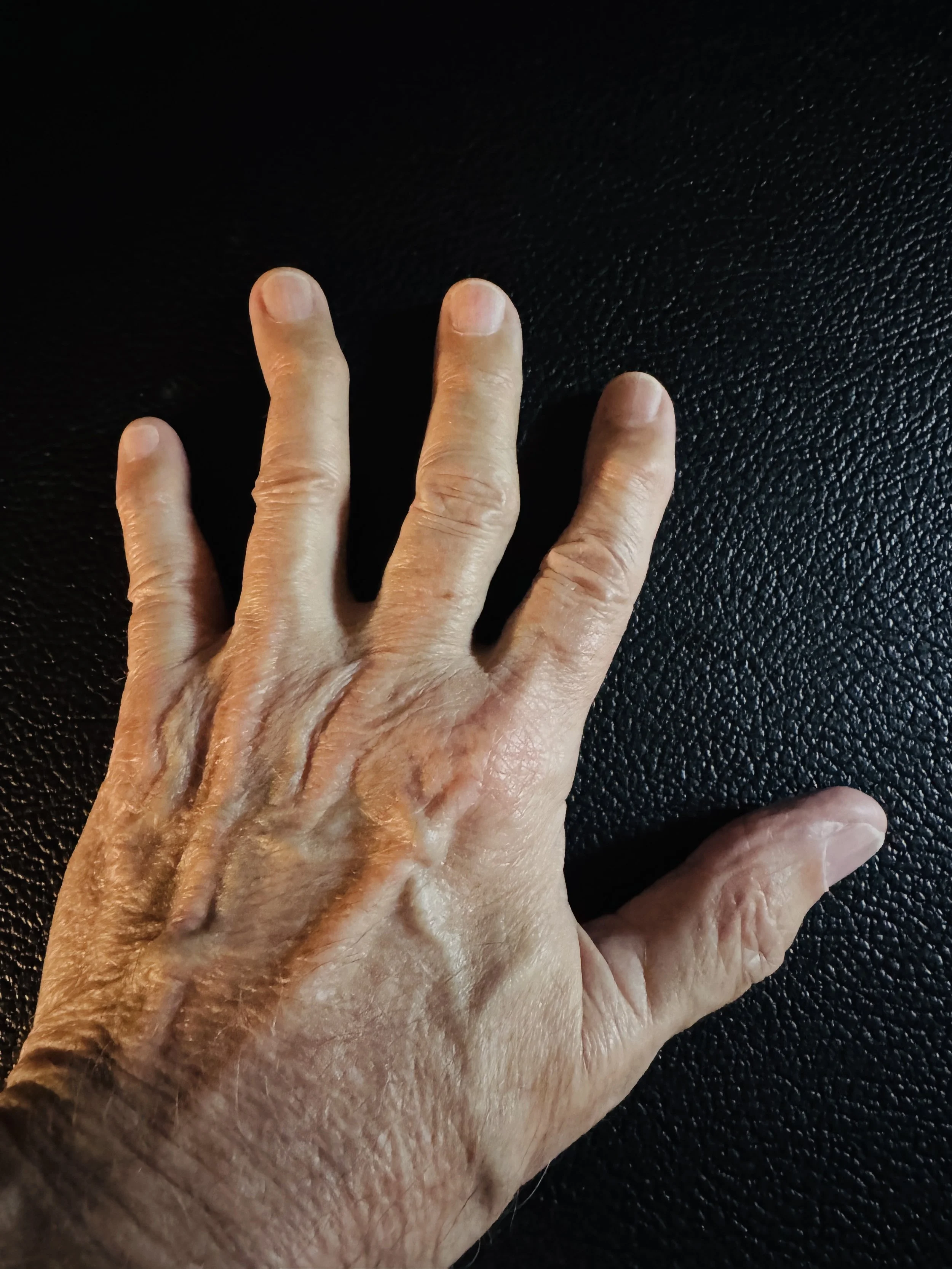
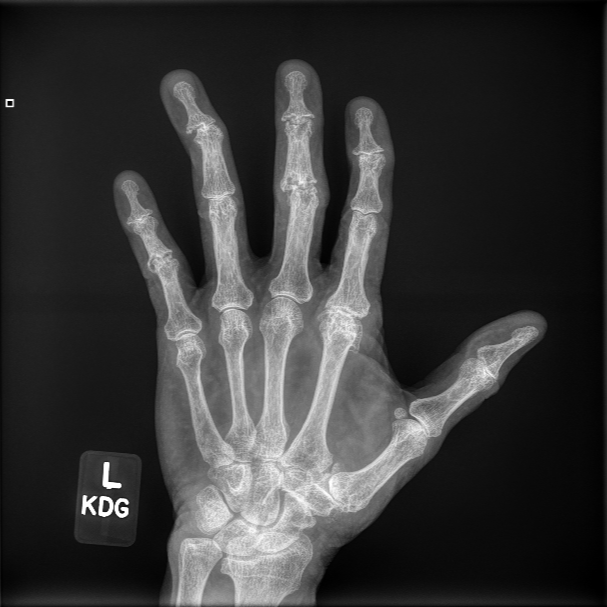
The official language from my report reads like this: severe degenerative arthritic changes with erosive arthritic changes most prominent in the distal interphalangeal joints of the second through fifth digits. The third and fifth proximal interphalangeal joints. The second metacarpophalangeal joint. Osteophyte formation. Remodeling of the joint spaces. Meaning my hands are now different than before.
What that means in plain English: most of the joints in my fingers are breaking down. Bone spurs are forming. The joints are physically reshaping themselves. My little finger on my left hand is nearly useless as a fretting finger now. I worked so hard back in my teens to train that little finger to be useful, and now I'm purposely having to unlearn that and learn how not to use it.
No dramatic injury story. No fall, no accident. Just time. Just years of playing and living, and the body doing what bodies eventually do. Listen to my song "When I Fall Apart" for my statement on aging.
But here's what the report doesn't capture, the part that actually changes how I play.
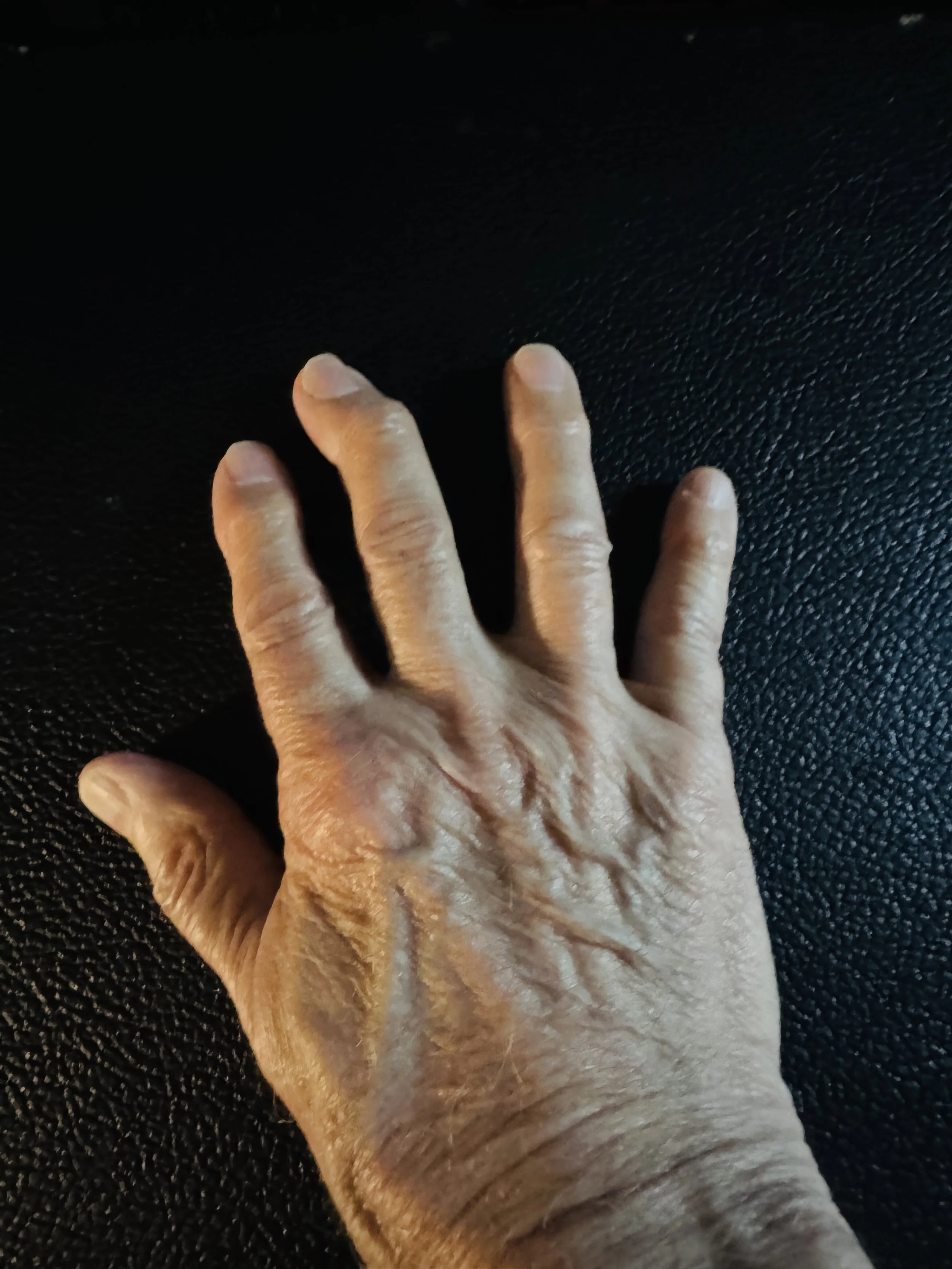
My ring finger tip, in the last sixteen to eighteen months, has started to bend downward at the top joint. And because of the swelling and the reshaping, my ring finger is now longer than my middle finger.
If you don't play guitar, that might not sound like much. Let me tell you what it means.
For decades, I knew exactly where my hand went. Thousands of hours of muscle memory, built chord by chord, song by song, year by year. My fingers knew the fretboard the way you know the layout of your own kitchen in the dark. You don't think. You just reach.
That's gone now.
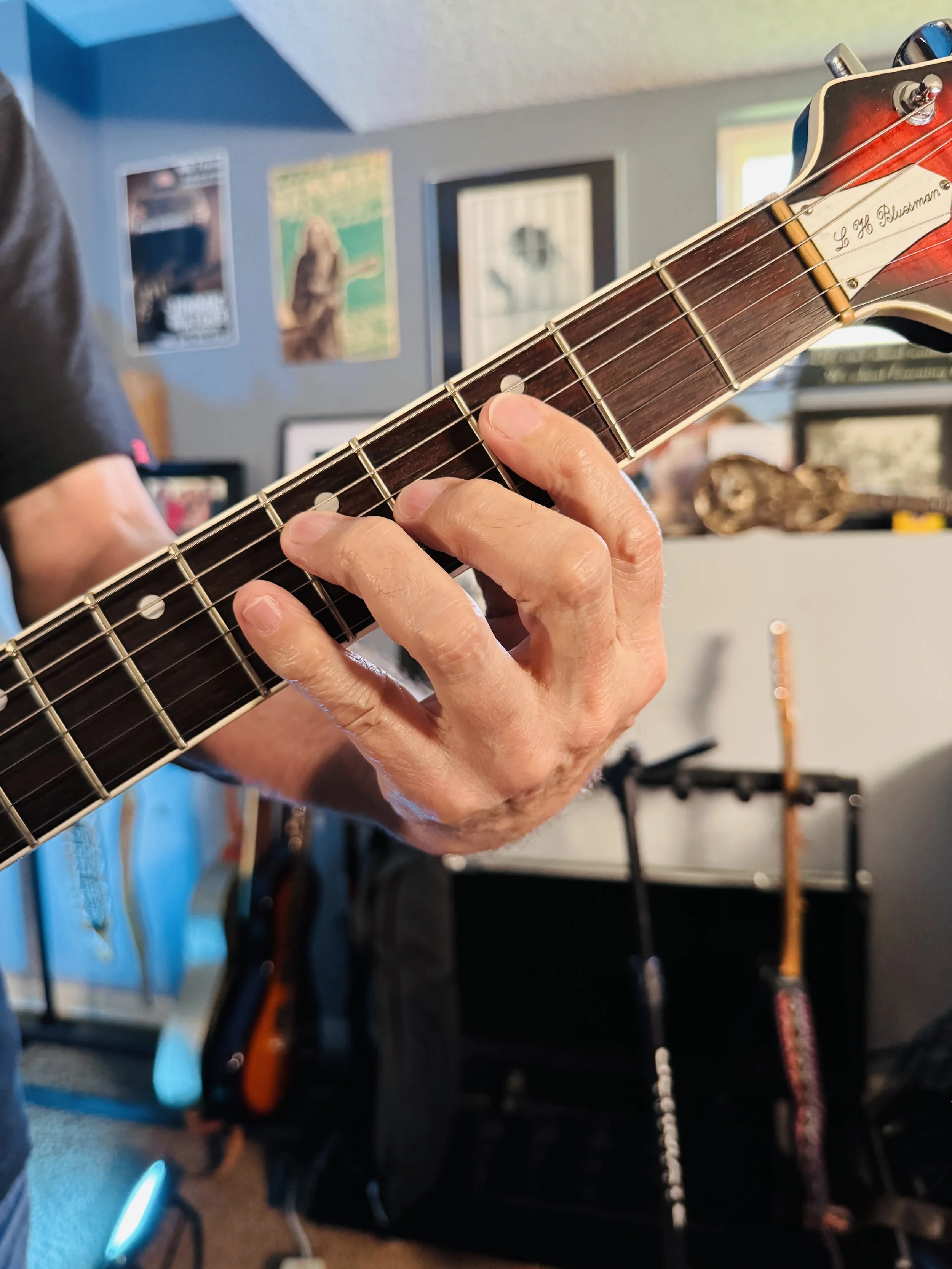
My ring finger doesn't land where it used to land. Which means I can't hold my left hand square to the fretboard anymore. I have to tilt my whole hand forward, toward the ground, to get my fingers into the position where they can actually find the notes. I am re-learning how to play. Not a new song. The same songs. New map, same territory.
Some days that feels like loss. I'm not going to pretend otherwise.
But here's where I hope my story and Keith's are the same.
A while back, while I was praying about all of this, the pain, the deformity, the question mark hanging over how long I'd be able to keep doing what I do, I felt the Lord speak something to me. Clear and quiet, the way He tends to do it.
"You'll be able to do what you do for the rest of your life. It may be different. But you'll still be able to do it."
I held onto that. I'm still holding onto it.
Different doesn't mean done. Different means I'm still here, still adapting, still finding a way. The guitar I play at seventy may not sound exactly like the guitar I played at forty-five. (It's still pretty close, by the way!) The hand position has already changed. The technique is changing. There are seasons when the swelling is worse, and every note costs something. But the door that music opens, that doesn't close because my knuckles ache.
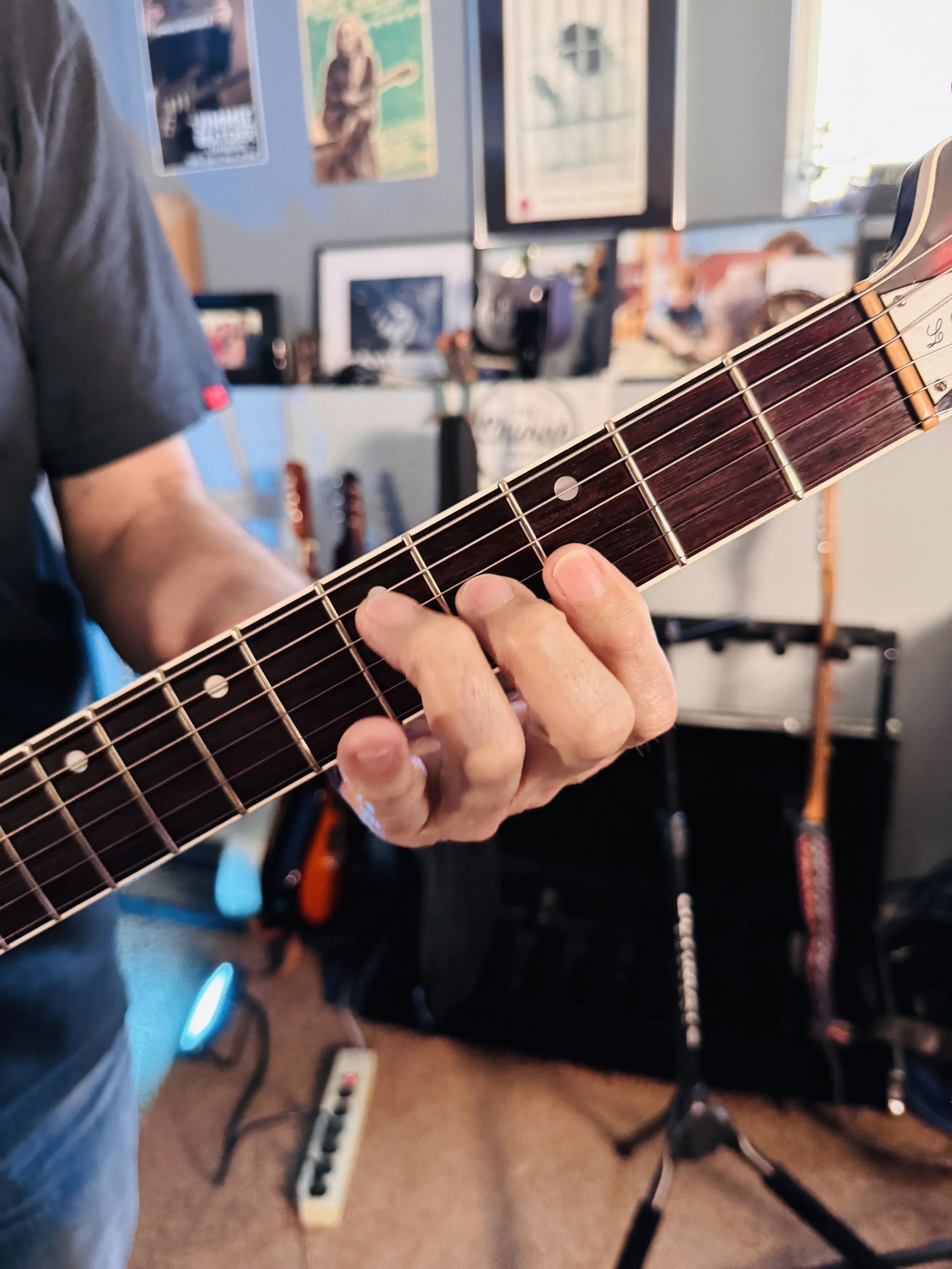
I don't know who's reading this and what your version of this looks like. Maybe it's your hands, like me. Maybe it's something else entirely, a body that won't cooperate the way it used to, a limitation that feels like it's closing in on something you love, something that matters, something that's part of how you connect with the world and the people in it.
Here's what I want you to hear:
Just because you have it doesn't mean it's over.
You may have to find a new way. You may have to grieve the old way first, and that's okay, that's honest, don't skip that part. But on the other side of that grief, there is still something left. There is still a way through.
Keith Richards may not be able to do the marathon anymore. I understand that. At 81, after everything those hands have been through, that's not surrender, that sounds like wisdom, to me. When the body says not like this, sometimes you listen.
But I've got a word in my spirit that says I'm not done, and I hope Keith isn't either. And so I tilt my hand forward, find the note in the new position, and I keep showing up.
That's kind of been the whole point all along.
Jimmie Bratcher is the founder of Connect Ministries in Kansas City, MO. He has recorded 14 albums and is still playing. His latest release, "Waitin' On The Man," has passed 700,000 views on YouTube.